Training and qualifications are crucial to becoming a pest control professional.
You do not need previous experience to start your journey. Most people train whilst working, by buddying up with another technician or their manager for a period of time whilst they learn the practical techniques, and with qualifications and learning typically funded by their employer as part of the role.
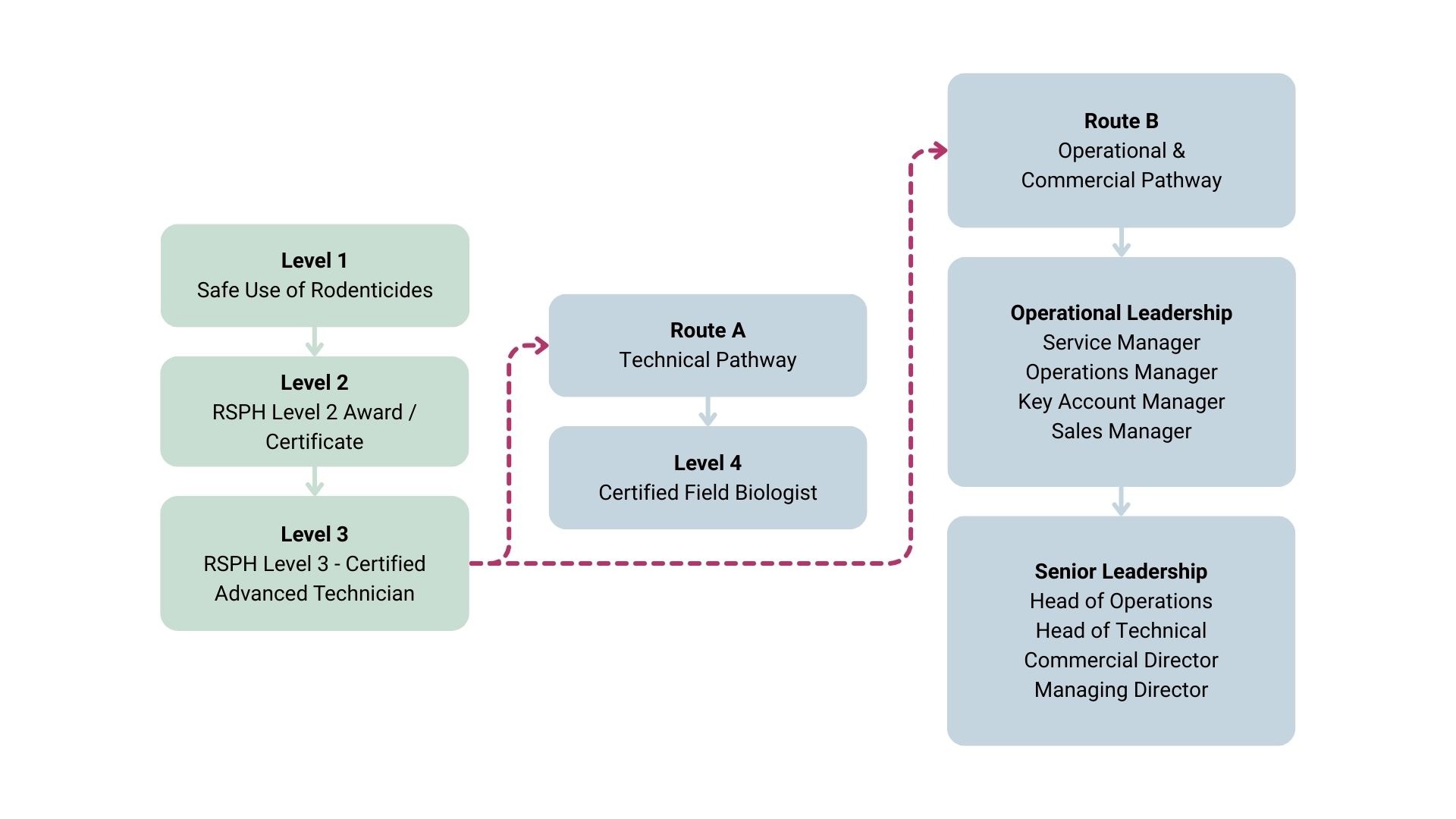
This page explains the typical qualification pathway, from entry-level learning through to advanced professional awards.
Starting Out in Pest Control: Entry-level learning and awareness
Many people begin their journey with an introduction to the industry, delivered during the early stages of company induction. This helps new starters understand the role before moving into formal qualifications.
This will include understanding what pest controllers do, learning about health and safety and legal responsibilities, gaining awareness of legal requirements and exploring the different types of pest control work available.
First Professional Qualification - Safe Use of Rodenticides
This qualification is required for anyone working with rodenticides and is a key part of professional pest control. It ensures technicians understand:
- Legal responsibilities
- Safe handling and application
- Environmental protection Best practice in rodent management

As your career Develops: RSPH Level 2 in Pest Management
The Level 2 Award/Certificate in Pest Management is the next step on the qualification ladder for the industry. The training for this provides essential knowledge and understanding and is widely recognised across the industry as the core general pest management qualification. It is normally completed within 18 months of joining the profession and covers core principles of pest management.
You will learn about:
- Vertebrate pest biology and identification
- Invertebrate pest biology and identification
- Safe and legal pest control methods
- Health and safety responsibilities
- Environmental protection and compliance
Higher Level Qualifications - Level 3 qualifications
As your experience and confidence grows, many pest controllers move on to higher-level qualifications. These support progression into specialist, supervisory, or technical roles.
Level 3 training covers:
- Advanced pest management strategies
- Commercial and high-risk environments
- Technical problem-solving
- Increased technical responsibility and decision making
Progression into specialist roles
Once you are a confident and capable pest control professional, you will find your career options open up in more varied directions. With the experience you have accrued, you will be equipped with the knowledge you need to turn your strengths and interests into a specialist profession.
Example: Certified Pest Management Biologist
As your experience grows further, you may choose to move into more advanced, analytical, and compliance-focused roles within pest control. One recognised pathway for this progression is becoming a Certified Pest Management Biologist.
This role is designed for experienced professionals who want to operate at a higher technical level, combining biological knowledge, detailed inspection skills, and evidence-based decision making.
What Does a Certified Pest Management Biologist Do?
Certified Pest Management Biologists typically work in environments where robust auditing, documentation, and compliance are critical. Their work often supports sites operating under recognised standards such as food safety and quality assurance frameworks.
This can include:
- Conducting detailed Pest Control Inspections
- Supporting clients with pest management audits for food manufacturing, pharmaceutical, and high-risk commercial sites
- Identifying and analysing pest risk trends and root causes
- Designing pest management strategies
- Reviewing pest management systems against recognised standards
- Advising on corrective actions, prevention, and long-term control strategies
- Client pest awareness training
- The role goes beyond routine treatment and focuses on assurance, verification, and technical oversight.

Discover more careers in pest control
Interested in following a pest control career path? Discover a range of specialist career paths that you could pursue.
Find out more