Is American public health facing an 'existential' moment?
Author: William Roberts 02 December 2025 1 min read
Fresh off the back of his visit to the American Public Health Association’s conference, William Roberts explores the biggest challenges and opportunities facing the global public health community right now.
I recently attended the American Public Health Association’s (APHA) annual conference. While it highlighted the challenging time we’re at for public health globally, it also allowed me to reflect on the successes we’ve had over the years.
What’s happening with US public health?
The US is at a time of rapid change. Under the current administration, major cuts and policy shifts are beginning to threaten public health and discredit science.
Firstly, there have been significant restructures across US Government health departments. The Department of Health and Human Services has gone through a large restructure and headcount reduction, and the Centres for Disease Control (CDC) – the US national public health agency which has typically had a wide remit around public health – has realigned to focus on communicable and infectious diseases.
Secondly, there has been significant changes to policy. There has been major pushback against vaccinations, and unproven links have been made between Tylenol (known as paracetamol in the UK) and autism.
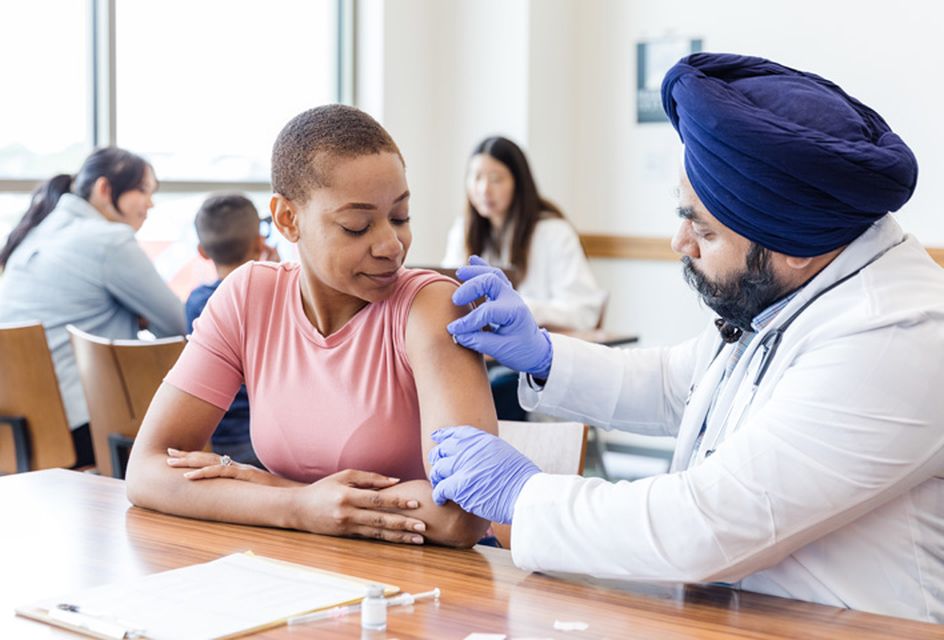
The problem is that the science unequivocally doesn’t back these policies up. We know that vaccines are an incredibly safe and effective way to protect your health and the health of those around you. We also know that there is no evidence of a link between use of paracetamol during pregnancy and autism in children.
There was a clear sentiment from the conference that the American public health community feels like it’s under attack – to the extent that, led by the APHA, public health organisations across the US have begun to challenge some of these decisions by suing the US government.
But it isn’t just the US that is facing challenges around health.
Does the rest of the world share some of these challenges?
There was a clear focus on US-specific issues at the conference. However, that’s not to say that these challenges aren’t being faced across the rest of the world.
In the UK, we too have an ageing population who are living longer with poor health. We also face challenges around access to healthcare for our most disadvantaged populations.
As we struggle with these challenges across the globe, we must ask ourselves: how does public health find its identity?
Good health is good for everybody
We know from polling that the public are supportive of public health interventions, both in the US and the UK. So how do we engage the public in conversations about their health and demystify what public health means for them?
That’s what we discussed at the session I chaired on ‘Health is Wealth’ alongside Jonathan Pearson-Stuttard, one of our Council Members at RSPH, and Elisha Dunn-Georgiou, Chief Executive of the Global Health Council. We discussed how good health and economic prosperity go hand in hand, and what this means in terms of policy.
The recent publication of the Keep Britain Working Review is a great example of this. It recognises that workplaces can – and should – be places where your health can improve, not decline. It isn’t just about getting people into work; it’s about supporting them while they’re there.
Another timely example of this in the UK is the removal of the two-child benefit cap, something which we have long called for alongside a host of great organisations. This could be a game-changer for both children and family’s health. Not only would it support families to provide their children with the things they need to be healthy, but it would also encourage them to spend money in the local economy.
The biggest challenges and opportunities for global public health
There were several key reflections that I took away from the conference.
Firstly, it is crucial that we demonstrate the importance of public health. As misinformation becomes increasingly present, we must help people to understand what public health means, and the good it can bring to their lives.
Secondly, we need to recognise that infrastructure is much easier to dismantle than it is to rebuild. The infrastructures that make up our public health systems – from our schools and hospitals to our workforces and services – must be protected.
Finally, we need to have hope.
One thing that conference highlighted to me was how many incredible things people are doing at a local level, and how many big wins the public health community has had over the years.
Whether that’s delivering vaccinations to reduce the rates of diseases, passing legislation to save lives and protect people from smoking harms, or creating incentives for healthier food consumption, we need to shout louder about all the incredible things that public health has achieved.
This article is adapted from the latest episode of our podcast, Spread the Health. Listen to the full episode below, or wherever you get your podcasts.